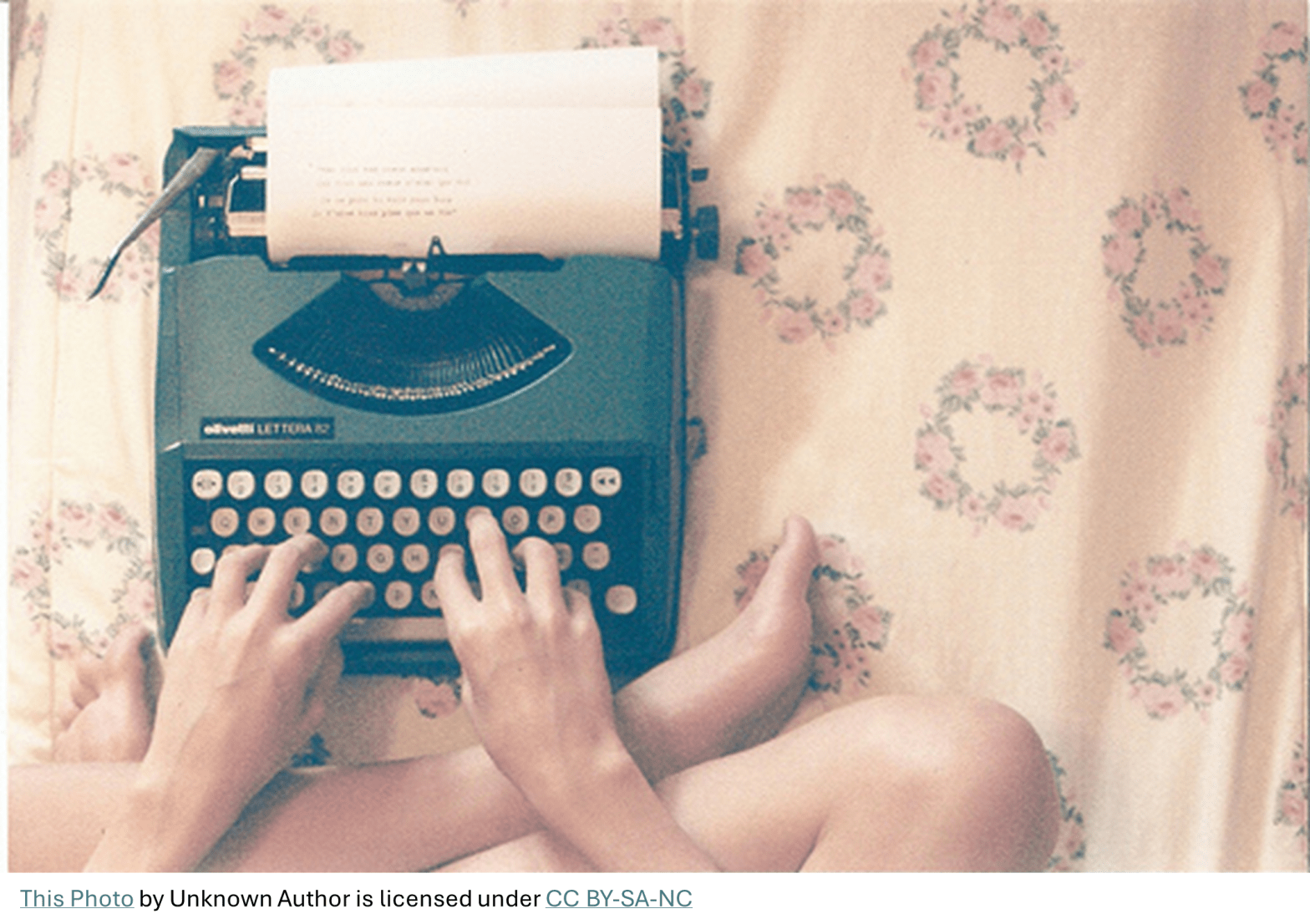
I’m changing my writing process. I’ve used the same writing process for seven years now, and it has served me well. I have strong reasons for changing it though, to adopting a better process for me. Now, instead of waiting a calendar year to revise and submit a drafted poem to my peers, and then waiting another calendar year to revise and submit said poem to magazines (which, in total could take as little as 13 months or as many as 36 months), I will now write a poem, wait six months to revise and submit it to my peers. Then I will revise it again and wait another six months to do one final revision before sending it to magazines. I’m removing the variance and expediting the art. If you’d like to read a dialogue I created between two abstractions (Art and Practicality) as I was thinking this through, feel free to read below.
Alright, my art and practicality are at a conference table speaking to each other. The point of discussion: the length of my writing process being at odds with my overall ambitions. Everything is on the table: pride, ego, consistency, accomplishments, reputation, imaginary money (haha).
Art: We want to create the best poems possible. Isn’t it better to keep the same writing process that we’ve used all of these years?
Prac: I hear you, Art, it is possible that your current timeline (which ensures that poems have existed for at least a year before being sent to a publisher, but can result in as much as three years between inception and submission) is what is best for producing quality art. There are a few reasons why I don’t think that is the case though.
- You really don’t have a standard waiting time for your poems.
You really just let them sit there until the calendar year changes, which introduces a lot of variance into the equation.
Art: The reason for the variance though is it is less demanding mentally to keep track of. I get the benefit of all my poems having existed for at least a year in the most expedited cases, and I don’t have to worry too much about it.
Prac: Well said, but this does mean that some poems are arbitrarily off the market for longer than others. A poem written in January has to wait a whole year to be revised and looked at by your poetry group, whereas your December Sparkler can be visited immediately the next month. Which brings me to my second point as to why I think we can make some positive adjustments.
- When you revise your poems for the first time, they often do not change too drastically once a first draft has set in.
This may be because the initial drafting process was so intense, or maybe they’ve just sat out too long and gone rigid? I don’t even know if that last one is true, but if the pattern is showing that poems don’t change that much between drafting and first revision, might it be alright to standardize the time following that first draft to when we can get it to our peers for review?
Art: You are making many good points, Prac. Part of me feels self-conscious that I don’t change my poems very substantially before getting it to my peers, but I still do like to give myself time after the initial draft and before first revision. I like to let my head clear. I do find things to alter on minute levels while sometimes changing whole lines or rearranging stanzas. I like to give myself that clarity before getting it to my peers.
Prac: That resting time will be preserved and regularized under this new schedule. If anything, many of your poems will have greater time to rest if we look at your habits of often being more productive at the end of the year than at the start. You’ve been killing it this year, by the way!
Art: Thank you, thank you.
Prac: Another reason—that we already alluded to—deals with the relevance of your poems:
- Your poems are always behind as far as current events go. With a revised writing process, you can make your poems more closely match their cultural moment.
It has always been a sadness of yours that a poem you write about X world event could be delayed by three years (due to the arbitrariness of your current, loose system). While you still won’t be writing and publishing a poem the day of some event (art always being more important to you than artistic reaction) this closes the gap a bit and makes things feel more relevant.
Art: I have always felt that tension between the time it takes to make and revise good art and the immediate cultural need. I do appreciate that.
Prac: One more big reason why we should make this switch.
Art: oh yeah? Why’s that?
Prac: Here’s the biggest reason we are going to make the switch.
- To help balance ambition with resources.
You have bigger ambitions with poetry, to share it with those around you, with those online. To do such while also pursuing a traditional publication path concurrently will require a greater production of poetry, to have poems you save for the traditional route while having others you are more willing to share. Since you need to write more poems to accomplish this, a reduction in the time it takes to write, revise, and polish is in order.
Art: Alright, Prac, so you are saying that because this change is regularizing a formerly loose schedule, because poems haven’t been historically shifting greatly from 1st draft to revised draft, because of the prolonged amount of time between inception and publication, and because of wanting to balance ambitions with resources we should make the shift?
Prac: Yes, sir.
Art: Ok, but I’ve already touted my writing process to my peers, to my students, to online strangers. Shouldn’t I be consistent?
Prac: Forced consistency is the bane of innovation. Remember that thing Emerson said that you liked? That he reserved the right to change his mind on anything he said? Are you really going to let a fear of being inconsistent or being viewed as inconsistent stop you from growing?
Art: Absolutely not. Thank you Prac.
Prac: You are welcome, Art.
*They disappear*
–M. Anthony

 Over/Poetry