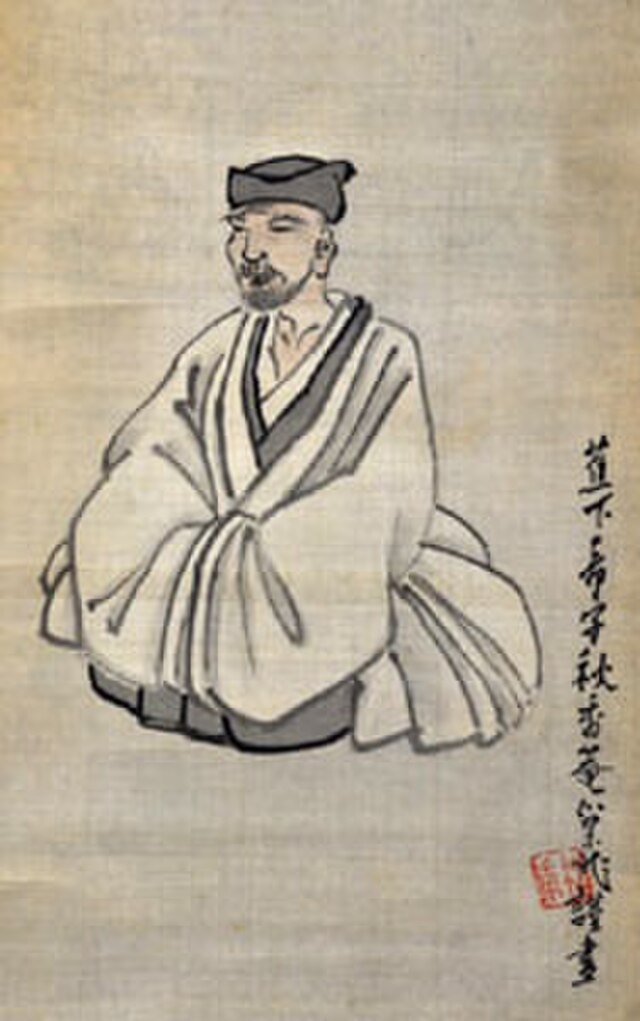
Twelve years ago, after taking a special 1-on-1 poetry mentor class with C. Wade Bentley where I practiced writing free verse poetry, I decided to make a self-study of haiku. As part of that, I finally decided to buy a book I had been eyeing for a year at the local Barnes & Noble “The Art of Haiku” by Stephen Addiss. The blurb on the book mentioned that the practice of writing haiku often came hand-in-hand with other artistic practices, such as paintings called “haiga.” To someone who only knew as a fun little game of 5-7-5, this intrigued me. The introduction to the book was found online, so I learned a bit about modern haiku and the depth of classical haiku. Though I did dive deeply into the study of haiku, I mostly read from two other books that a poet friend of mine recommended: the first, a translation of classic haiku by Robert Hass; the second, an anthology of English haiku with a foreword by Billy Collins. These were both excellent volumes that gave me a great sense of the past and present of haiku.
Five years after that, I came across Renga and was thrilled to learn that it was both a traditional and a collaborative form of poetry. I was inspired by its disjunctive linking (the which nonconformity often baffled professors of mine). I picked up a copy of Sato’s “One Hundred Frogs” and had fun trying to write these “poems about everything” with my friends.
With my new ambitions in place to write more, I feel compelled to return to haiku, and Addiss’s book is calling to me. I read the introduction today, of the which I’ve underlined several parts. Haiku is a pillar in my pantheon of poetry. It is load bearing. It holds up in its way the center gap for the sun to shine in.
Haiga is the main topic of the book, which is the practice of combining calligraphy, haiku, and painting. In a way, each of these blog posts is a modern haiga, combining typography, prose, and imagery. I hope to
I’m excited to read it little-by-little and share with you what sparkles I find.

 Over/Poetry